

Catholic Cemeteries and Crematoria has no immediate plans to offer human composting following New South Wales parliament’s approval of the practice, and has yet to decide whether it could accept remains produced elsewhere.
Chief executive officer Lauren Hardgrove said the organisation would consider the regulatory requirements and relevant church guidance before determining its approach.
The Public Health Amendment (Terramation) Bill passed parliament on 21 October and received assent on 28 October. Relevant regulatory provisions are not expected to commence for two years, allowing time to develop safeguards.

Terramation, also known as natural organic reduction, involves placing a body in an above-ground vessel with organic materials such as straw and mulch to accelerate decomposition into a large quantity of soil-like material.
This can then be offered to families with options including the planting of a memorial tree.
Independent Sydney MP Alex Greenwich, who introduced the legislation, has argued it would offer another choice amid concerns about funeral costs, burial space and cremation emissions.
“We are running out of burial space [and] that space can cost as much as $50,000,” he told media in June.
However, Hardgrove said the potential effect on funeral costs and cemetery capacity remained uncertain.

It would depend on the cost of providing the service, demand and how families chose to manage and memorialise the resulting remains.
“As a Catholic organisation serving families of all faiths and beliefs, we will assess the implications as further details become available and seek appropriate church guidance where relevant,” she said in an email to The Catholic Weekly.
Whether families could bring remains produced through terramation elsewhere to its cemeteries would depend on the regulations and church guidance.
“We have no immediate plans to offer terramation at our facilities,” Hardgrove said.
“However, we regularly assess emerging options and developments in the sector to ensure our services continue to respond to the changing needs and expectations of the communities we serve.”
She said the organisation had received no enquiries about terramation and did not anticipate immediate changes to existing services.
Respectful treatment of the remains has also been raised in parliament.
“Terramation should not simply become a human compost bin,” argued Liberal upper house MP Susan Carter during debate.
Professor Clare Johnson, director of Australian Catholic University’s Centre for Liturgy, said human composting was incompatible with Catholic understandings of the dignity of the body and faith in the resurrection.
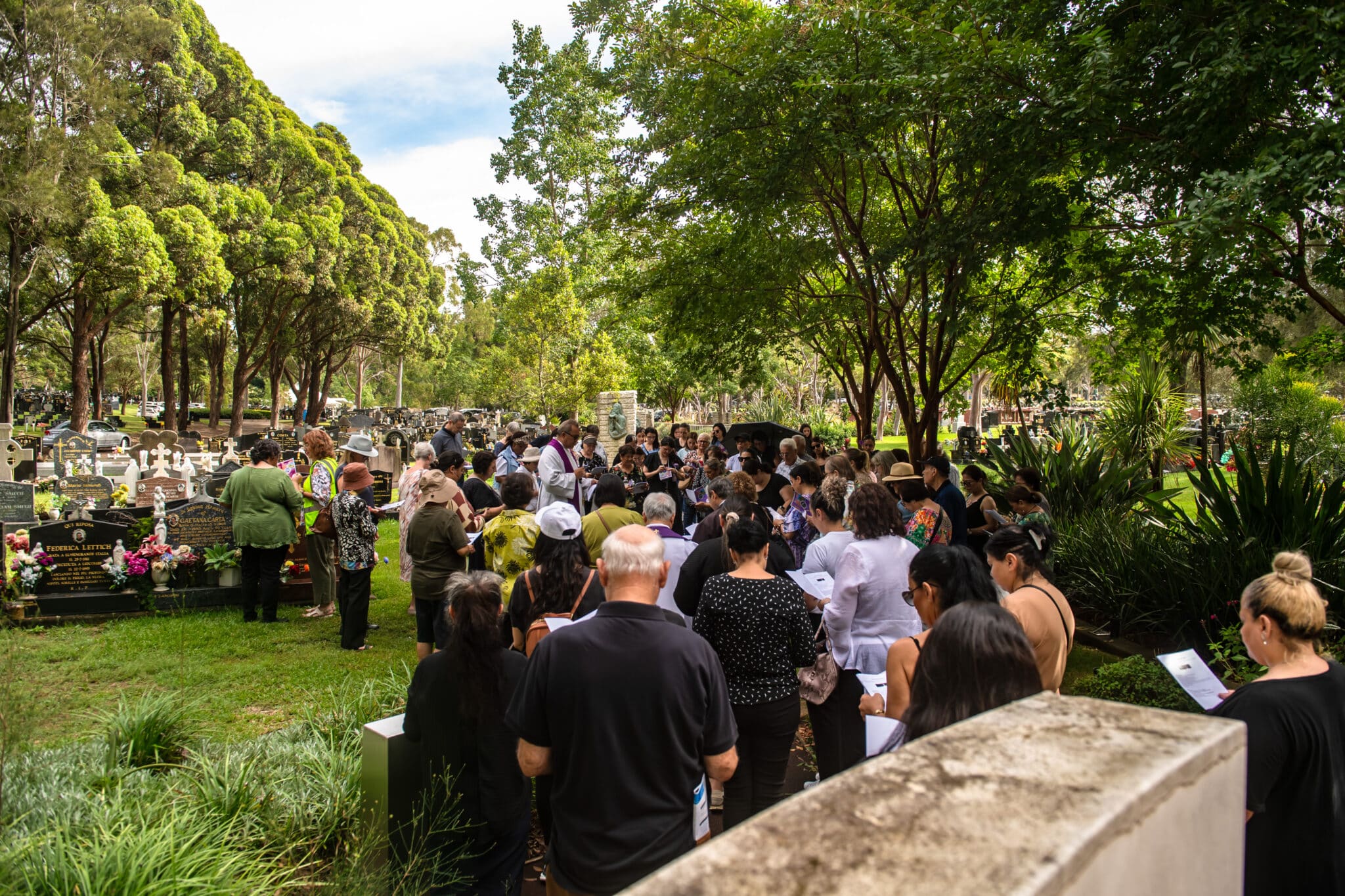
She said both the process and the proposed use of the remains reflected a different understanding of the human body after death.
“Anything that promotes care of the environment is a worthy initiative,” she said.
“But we do have a very different perspective on the way that human remains are to be treated.”
Hardgrove called for safeguards covering public health, environmental protection, respectful treatment and traceability, with clear requirements for subsequent handling and interment.
“These safeguards are important to ensure families and the community have confidence in the dignity, safety and accountability of the process,” she said.
Catholic Cemeteries and Crematoria already offered natural burial areas, alongside burial, cremation and memorial options, as well as payment plans and compassionate assistance for eligible families experiencing financial hardship, Hardgrove added.


